World Model Team Lead @ Function

Dr. Héctor Carrión

World Model Team Lead at Function · CS Ph.D. (UC Santa Cruz / UC Berkeley) · ex-Tera AI & Google Research

I build multimodal world models that learn how physical and biological systems change across space, time, and interventions, spanning 3D autonomy and longitudinal human health.

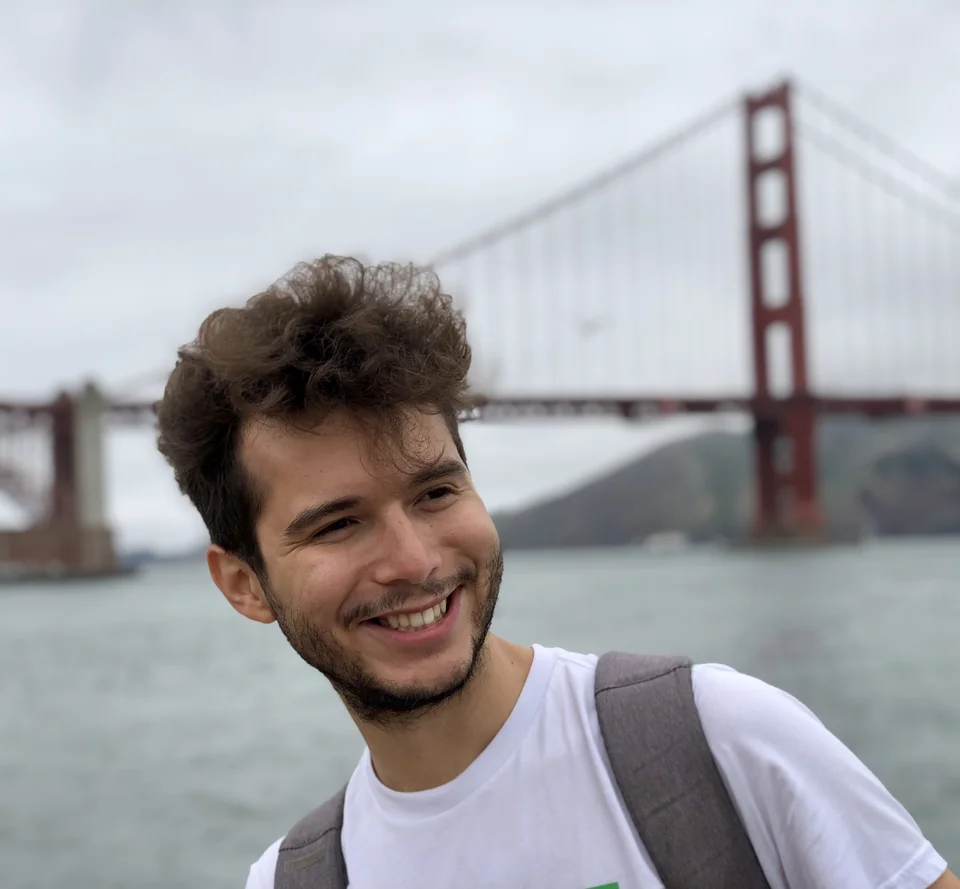
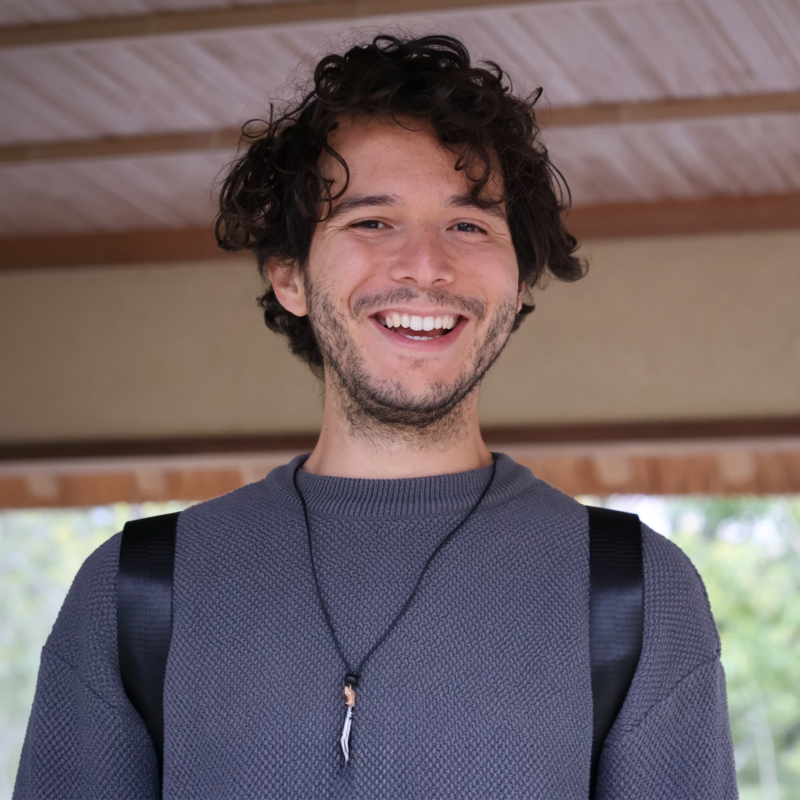
Portrait of Dr. Héctor Carrión
World Models3D VisionMed AIJEPADiffusion
  • World Models
  • 3D Vision
  • Med AI
  • JEPA
  • Diffusion

About

I lead the World Model team at Function, building JEPA and autoregressive models over longitudinal lab tests, imaging, and member health history to monitor for early indicators and give members a clearer picture of how their biology changes over time.

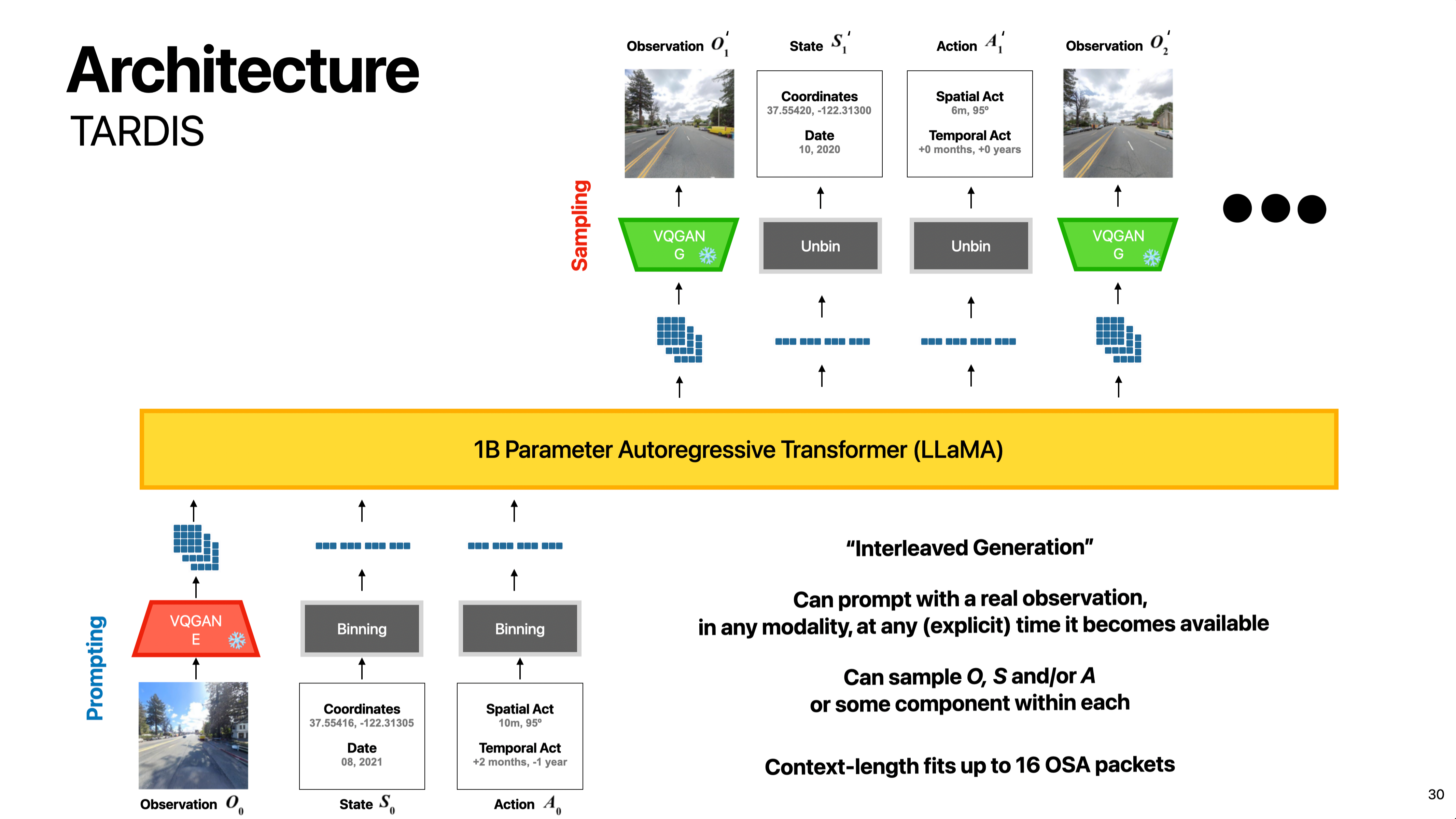
My work across autonomy and medical AI focuses on one core problem: learning structured state representations across space, time, and actions when labeled data is scarce. Before Function, I was Founding Lead Research Scientist at Tera AI, where I led TARDIS & STRIDE (with Pietro Perona and Jitendra Malik), a 1B-parameter spatio-temporal world model for street-view synthesis, georeferencing, and action prediction. Earlier, I built multimodal video-image encoders and simulation systems at Google Research and X (Google [X]).

I earned my Computer Science Ph.D. at UC Santa Cruz, advised by Dr. Narges Norouzi at UC Berkeley. My doctoral research developed single-view metric 3D reconstruction (DermDepth), self-supervised temporal stage discovery (HealNet), controllable diffusion priors for underrepresented populations (cgDDI, FEDD), and closed-loop bioelectronic imaging pipelines.

A practical focus on building reliable systems that directly contribute to real-life positive impact shapes how I lead teams, advise Visia AI, and open-source models and datasets.

Research focus

  • World Models
  • JEPA & Autoregressive Dynamics
  • 3D Vision
  • Diffusion Models
  • Medical AI
  • Self-Supervised Learning
  • Embodied Autonomy

News

  1. Joined Function as World Model Team Lead, directing research on JEPA and autoregressive longitudinal health models.

  2. Presented two first-author papers at MICCAI 2026: DermDepth (metric 3D dermatology) and cgDDI (controllable generative fairness), with open weights, D-Synth, 266k+ synthetic images, and an interactive 3D Space.

  3. Completed my Ph.D. in Computer Science at UC Santa Cruz, advised by Dr. Narges Norouzi at UC Berkeley.

  4. Published our study on portable fluorescent imaging in healing tissue in Nature Communications Biology.

  5. Released TARDIS STRIDE, our 1B-parameter spatio-temporal world model and street-view autonomy dataset at Tera AI, with training code and open dataset.

  6. Published Remote-Controlled Wireless Bioelectronics for Fluoxetine Therapy in Advanced Materials Technologies.

Publications

2026
MICCAI 2026

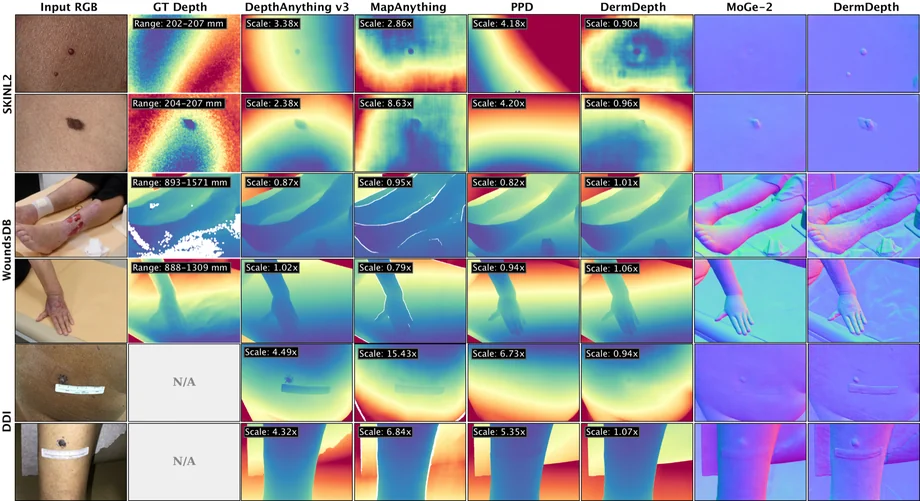
DermDepth: Toward Monocular Metric Scale 3D Reconstruction Models for Dermatology

Héctor Carrión, Narges Norouzi

Adapts a monocular 3D model with synthetic D-Synth data and small clinical datasets to recover metric lesion geometry and detailed surface normals from one image.

Synthetic training reduces SKINL2 depth-scale overestimation from 16.1× to 1.11× while fine-tuning only 0.6% of model parameters.

Dermatological practice routinely involves measuring and tracking lesion size, morphology and texture, as critical components of wound or skin cancer screening, monitoring and diagnosis. To accomplish this task, practitioners often image the skin surface with commonly available off-the-shelf camera sensors. This has led to an overwhelming research focus on 2D methods while these objectives naturally benefit from 3D information. In this paper, we demonstrate that dense monocular 3D reconstructions, metric scale measurements and rich surface normal texture estimates are achievable for both dermoscopic and macroscopic cases without the need for additional hardware or multiple captures. We present DermDepth, the first single-view metric scale 3D model for the dermatological domain and D-Synth, the first synthetic dermoscopic dataset with pixel-perfect 3D information. Our experiments show training DermDepth on D-Synth corrects metric scale error from over 16× to under 1.1× for real dermoscopic data, while preserving geometric quality and increasing texture richness. Fine-tuning on a small amount of real clinical samples generalizes our method across three real-world benchmarks spanning the few mm to hundred cm range, diverse skin-tones, chronic wound cases and produces measurements broadly consistent with disease size reported in medical literature.
MICCAI 2026

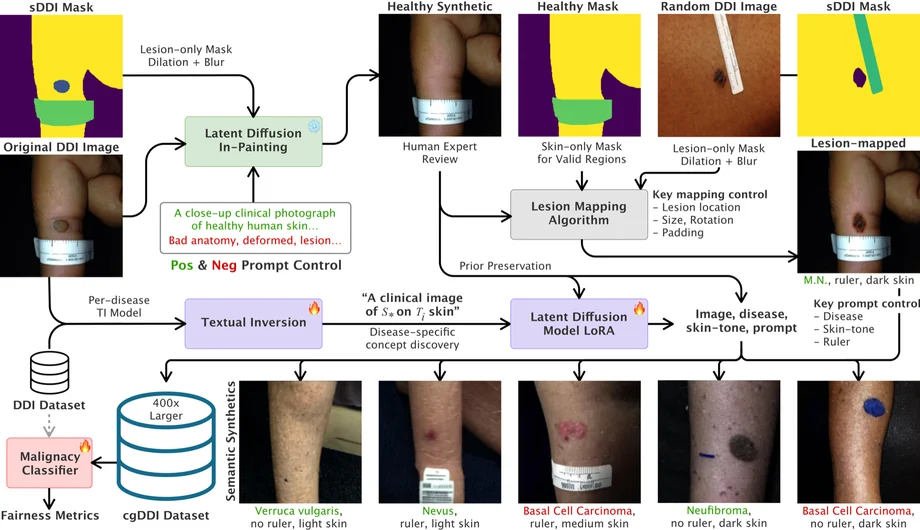
cgDDI: Controllable Generation of Diverse Dermatological Imagery for Fair and Efficient Malignancy Classification

Héctor Carrión, Narges Norouzi

Combines healthy-skin inpainting, rare-lesion mapping, and disease-conditioned diffusion to create 266k+ synthetic dermatology images across skin tones and improve malignancy classification.

90.9% DDI malignancy accuracy, with equality of opportunity improving from 69.6% to 86.6% versus PatchAlign after real-data fine-tuning.

PaperarXivCodeData

Accurate dermatological diagnosis naturally necessitates equitable performance across diverse populations, yet a systematic lack of expertly annotated images, especially for underrepresented skin tones and rare diseases, impedes progress toward measurably fair methods. We introduce cgDDI (Controllable Generation of Diverse Dermatological Imagery), a hybrid framework that (1) synthesizes realistic healthy skin samples without disturbing other input properties, (2) maps single-sample rare lesions onto novel skin-tones and locations non-parametrically, and (3) allows for efficient parametric generation with as few as 10 training samples. The framework supports both human and automated segmentation masking, enabling scalability to datasets without pre-made lesion masks. We grow a 656-image dataset by more than 400× and validate across two datasets: biopsy-confirmed Diverse Dermatology Images (DDI) and expert-verified Fitzpatrick17k (F17k). On the DDI benchmark, we achieve malignancy classification accuracy of 86.4% under synthetic-only training and 90.9% state-of-the-art performance with real data fine-tuning, alongside leading fairness metrics. Cross-dataset experiments show +13.9% accuracy improvements on unseen F17k data despite minimal disease overlap.

2025
Nature Comm. Biol. 2025

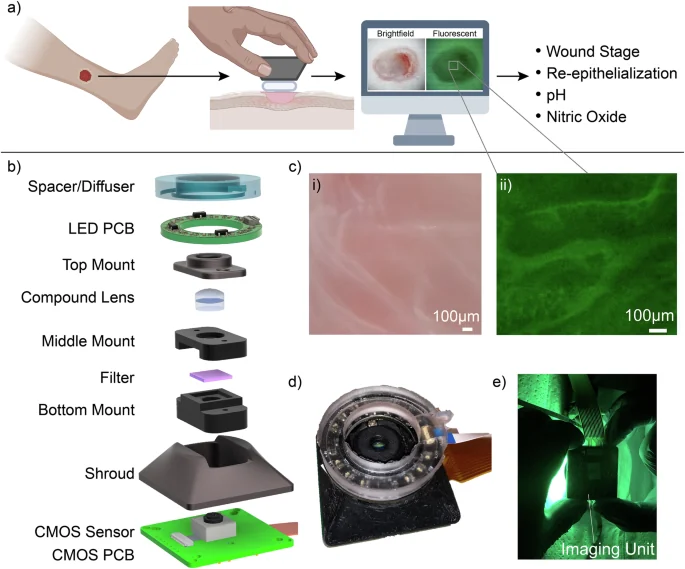
A Modular Fluorescent Camera Unit for Wound Imaging

Maryam Tebyani, Gordon Keller, Wan Shen Hee, …, Héctor Carrión, …, Mircea Teodorescu

Combines portable fluorescent imaging with spatial clustering to map pH and nitric oxide in mouse wounds and relate biomarker patterns to healing progression.

Across eight mouse wounds, smaller, brighter nitric-oxide regions correlate with later healing days and greater re-epithelialization.

Paper

The researchers developed a hand-held fluorescent microscope featuring rapid set-up and sub-millimeter resolution for biological imaging. They applied this system to track pH and nitric oxide biomarkers in wound healing, using machine learning to identify spatial patterns. Their findings revealed that NO clustering shows high-concentration structures that decrease in size but intensify during the healing progression, potentially enabling prediction of healing stages.

arXiv 2025

TARDIS STRIDE: A Spatio-Temporal Road Image Dataset and World Model for Autonomy

Héctor Carrión, Yutong Bai, Víctor A. Hernández Castro, …, Jitendra Malik

Trains a billion-parameter world model on street-view images linked by location, time, and movement commands, unifying controlled image generation, geolocation, and action prediction.

60% of geolocation predictions fall within 10 meters on STRIDE’s San Mateo test data.

World models aim to simulate environments and enable effective agent behavior. However, modeling real-world environments presents unique challenges as they dynamically change across both space and, crucially, time. To capture these composed dynamics, we introduce a Spatio-Temporal Road Image Dataset for Exploration (STRIDE) permuting 360º panoramic imagery into rich interconnected observation, state and action nodes. Leveraging this structure, we can simultaneously model the relationship between egocentric views, positional coordinates, and movement commands across both space and time. We benchmark this dataset via TARDIS, a transformer-based generative world model that integrates spatial and temporal dynamics through a unified autoregressive framework trained on STRIDE. We demonstrate robust performance across a range of agentic tasks such as controllable photorealistic image synthesis, instruction following, autonomous self-control, and state-of-the-art georeferencing. These results suggest a promising direction towards sophisticated generalist agents--capable of understanding and manipulating the spatial and temporal aspects of their material environments--with enhanced embodied reasoning capabilities. Training code, datasets, and model checkpoints are made freely available.

Adv. Mater. Tech. 2025

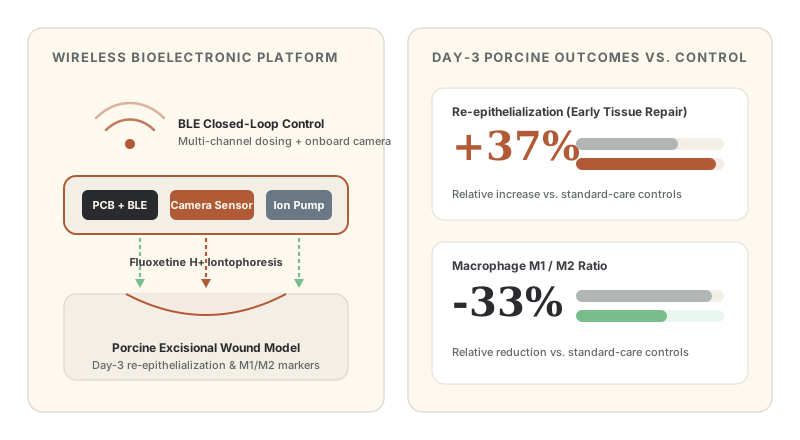
Remote-Controlled Wireless Bioelectronics for Fluoxetine Therapy to Promote Wound Healing in a Porcine Model

Houpu Li, Narges Asefifeyzabadi, Kaelan Schorger, …, Héctor Carrión, …, Marco Rolandi

Tests remotely controlled, multi-channel fluoxetine delivery with onboard wound imaging in a porcine model, demonstrating improved early repair relative to standard care.

At day 3, treated porcine wounds show 37% greater re-epithelialization and a 33% lower M1/M2 ratio than standard-care controls.

Paper

Wound healing is a significant opportunity in biomedical science, requiring precise therapeutic delivery and real-time monitoring. Bioelectronic devices address this need and require further validation in large animal models that reflect human healing dynamics. This work introduces a wireless, remotely controlled bioelectronic platform with an iontophoretic pump to deliver fluoxetine, a selective serotonin reuptake inhibitor that modulates inflammation and promotes wound repair. Treatment over 3 days in a porcine model increased re-epithelialization by 37% and reduced inflammation, as shown by a 33% decrease in the ratio of pro-inflammatory M1 macrophages to pro-reparative M2 macrophages compared to controls. The platform accelerated early wound healing and stimulated neuronal growth at the wound site.

2024
Adv. Mater. Tech. 2024

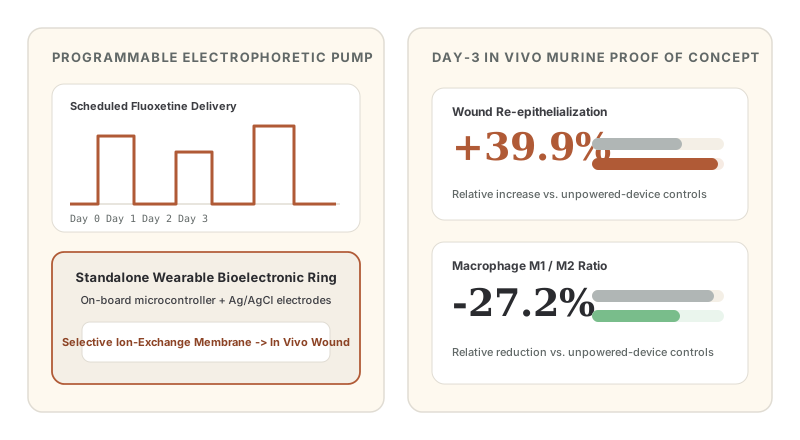
Programmable Delivery of Fluoxetine via Wearable Bioelectronics for Wound Healing In Vivo

Houpu Li, Hsin-ya Yang, Narges Asefifeyzabadi, …, Héctor Carrión, …, Marco Rolandi

Demonstrates a standalone wearable ion pump that delivers scheduled fluoxetine doses, improving early tissue repair and inflammatory markers in a mouse-wound proof of concept.

At day 3, treated mouse wounds show 39.9% greater re-epithelialization and 27.2% lower M1/M2 ratios than inactive-device controls.

Paper

The ability to deliver drugs with precise dosages at specific time points can significantly improve disease treatment while reducing side effects. Drug encapsulation for gradual delivery has opened the doors for a superior treatment regimen. To expand on this ability, programming bioelectronic devices to deliver small molecules enables ad-hoc personalized therapeutic profiles that are more complex than gradual release. Here, a wearable bioelectronic device with an integrated electrophoretic ion pump that affords on-demand drug delivery with precise dose control is introduced. Delivery of fluoxetine to wounds in mice result in a 27.2% decrease in the macrophage ratio (M1/M2) and a 39.9% increase in re-epithelialization, indicating a shorter inflammatory phase and faster overall healing. Programmable drug delivery using wearable bioelectronics in wounds introduces a broadly applicable strategy for the long-term delivery of a prescribed treatment regimen with minimal external intervention.

2023
MICCAI 2023

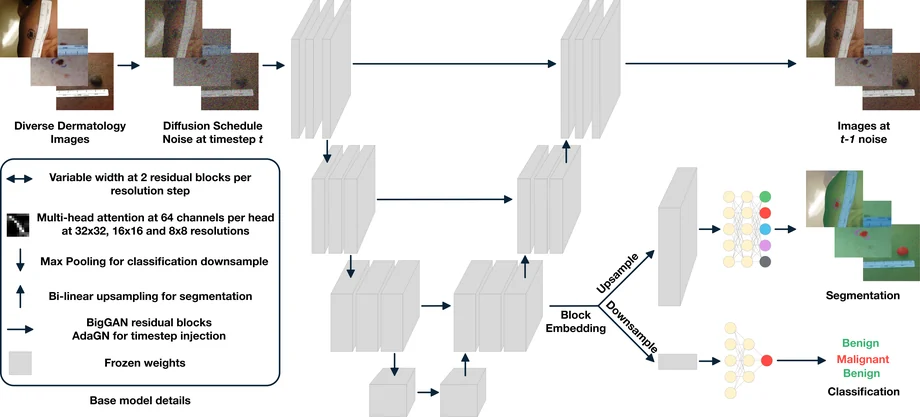
FEDD: Fair, Efficient, and Diverse Diffusion-Based Lesion Segmentation and Malignancy Classification

Héctor Carrión, Narges Norouzi

Uses a frozen diffusion model’s visual features with lightweight prediction heads to segment skin lesions and classify malignancy from small, skin-tone-balanced labeled datasets.

81% DDI malignancy accuracy from 60 labeled training images, with no diffusion-backbone fine-tuning.

PaperarXivCode

Skin diseases affect millions of people worldwide, across all ethnicities. Increasing diagnosis accessibility requires fair and accurate segmentation and classification of dermatology images. However, the scarcity of annotated medical images, especially for rare diseases and un- derrepresented skin tones, poses a challenge to the development of fair and accurate models. In this study, we introduce a Fair, Efficient, and Diverse Diffusion-based framework for skin lesion segmentation and ma- lignancy classification. FEDD leverages semantically meaningful feature embeddings learned through a denoising diffusion probabilistic backbone and processes them via linear probes to achieve state-of-the-art perfor- mance on Diverse Dermatology Images (DDI). We achieve an improve- ment in intersection over union of 0.18, 0.13, 0.06, and 0.07 while using only 5%, 10%, 15%, and 20% labeled samples, respectively. Additionally, FEDD trained on 10% of DDI demonstrates malignancy classification ac- curacy of 81%, 14% higher compared to the state-of-the-art. We showcase high efficiency in data-constrained scenarios while providing fair perfor- mance for diverse skin tones and rare malignancy conditions. Our newly annotated DDI segmentation masks and training code can be found on https://github.com/hectorcarrion/fedd

2022
MICCAI MLMI 2022

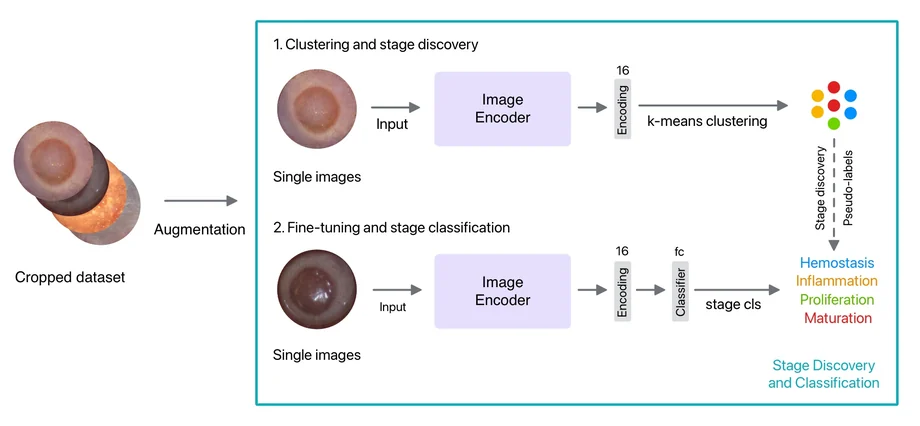
HealNet: Self-Supervised Acute Wound Heal-Stage Classification

Héctor Carrión, Mohammad Jafari, Hsin-Ya Yang, Roslyn Rivkah Isseroff, Marco Rolandi, Marcella Gomez, Narges Norouzi

Learns temporal ordering from mouse-wound image pairs, clusters the resulting features into four healing stages, and trains a classifier without manual stage annotations.

90.6% test accuracy against cluster-derived healing-stage labels on 32 held-out mouse-wound images.

PaperarXiv

Identifying, tracking, and predicting wound heal-stage progression is a fundamental task towards proper diagnosis, effective treatment, facilitating healing, and reducing pain. Traditionally, a medical expert might observe a wound to determine the current healing state and recommend treatment. However, sourcing experts who can produce such a diagnosis solely from visual indicators can be difficult, time-consuming and expensive. In addition, lesions may take several weeks to undergo the healing process, demanding resources to monitor and diagnose continually. Automating this task can be challenging; datasets that follow wound progression from onset to maturation are small, rare, and often collected without computer vision in mind. To tackle these challenges, we introduce a self-supervised learning scheme composed of (a) learning embeddings of wound’s temporal dynamics, (b) clustering for automatic stage discovery, and (c) fine-tuned classification. The proposed self-supervised and flexible learning framework is biologically inspired and trained on a small dataset with zero human labeling. The HealNet framework achieved high pre-text and downstream classification accuracy; when evaluated on held-out test data, HealNet achieved 97.7% pre-text accuracy and 90.62% heal-stage classification accuracy.

PLOS Comp. Biol. 2022

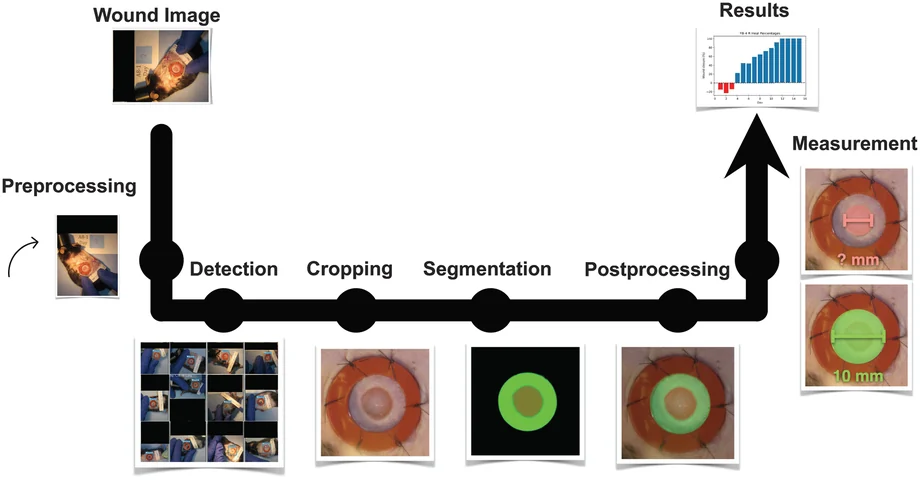
Automatic Wound Detection and Size Estimation Using Deep Learning Algorithms

Héctor Carrión, Mohammad Jafari, Michelle Dawn Bagood, Hsin-ya Yang, Roslyn Rivkah Isseroff, Marcella Gomez

Combines wound detection, segmentation, and reference-based sizing to automate mouse-wound measurements, preserving closure trends despite uneven imaging and missing or damaged splints.

Post-processing raises U-Net test Dice from 67.85% to 86.65% for segmenting mouse wounds and splints.

PaperCode

Evaluating and tracking wound size is a fundamental metric for the wound assessment process. Good location and size estimates can enable proper diagnosis and effective treatment. Traditionally, laboratory wound healing studies include a collection of images at uniform time intervals exhibiting the wounded area and the healing process in the test animal, often a mouse. These images are then manually observed to determine key metrics —such as wound size progress— relevant to the study. However, this task is a time-consuming and laborious process. In addition, defining the wound edge could be subjective and can vary from one individual to another even among experts. Furthermore, as our understanding of the healing process grows, so does our need to efficiently and accurately track these key factors for high throughput (e.g., over large-scale and long-term experiments). Thus, in this study, we develop a deep learning-based image analysis pipeline that aims to intake non-uniform wound images and extract relevant information such as the location of interest, wound only image crops, and wound periphery size over-time metrics. In particular, our work focuses on images of wounded laboratory mice that are used widely for translationally relevant wound studies and leverages a commonly used ring-shaped splint present in most images to predict wound size. We apply the method to a dataset that was never meant to be quantified and, thus, presents many visual challenges. Additionally, the data set was not meant for training deep learning models and so is relatively small in size with only 256 images. We compare results to that of expert measurements and demonstrate preservation of information relevant to predicting wound closure despite variability from machine-to-expert and even expert-to-expert. The proposed system resulted in high fidelity results on unseen data with minimal human intervention. Furthermore, the pipeline estimates acceptable wound sizes when less than 50% of the images are missing reference objects.

VISAPP 2022

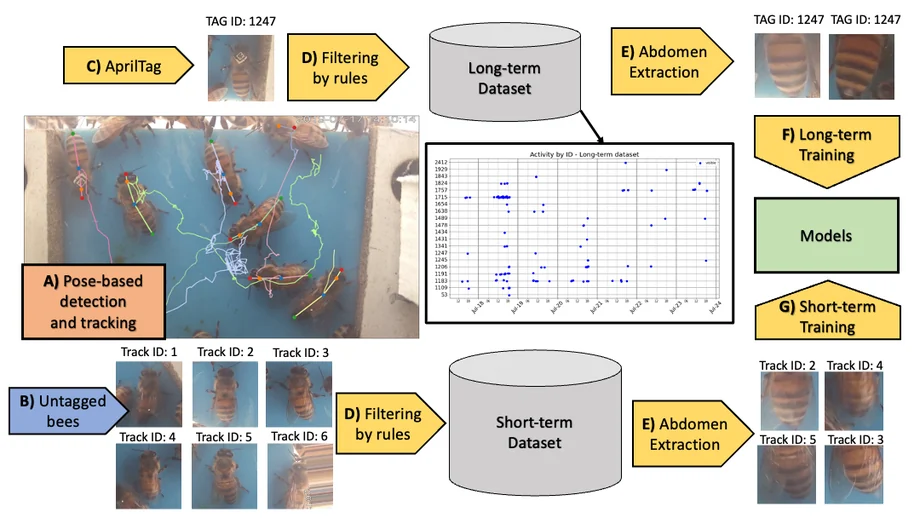
Honeybee Re-identification in Video: New Datasets and Impact of Self-Supervision

Jeffrey Chan, Héctor Carrión, Rémi Mégret, José Rivera, Tugrul Giray

Studies honeybee re-identification from abdomen images, using short video tracks for self-supervised pretraining and tag-derived identity labels for fine-tuning across days.

62.4% rank-1 identification across days, choosing among 11 gallery images using abdomen appearance alone.

Paper

This paper presents an experimental study of long-term re-identification of honeybees from the appearance of their abdomen in videos. The first contribution is composed of two image datasets of single honeybees ex- tracted from 12 days of video and annotated with information about their identity on long-term and short-term scales. The long-term dataset contains 8,962 images associated to 181 known identities and used to evaluate the long-term re-identification of individuals. The short-term dataset contains 109,654 images associated to 4,949 short-term tracks that provide multiple views of an individual suitable for self-supervised training. A deep convolutional network was trained to map an image of the honeybee’s abdomen to a 128 dimensional fea- ture vector using several approaches. Re-identification was evaluated in test setups that capture different levels of difficulty: from the same hour to a different day. The results show using the short-term self-supervised in- formation for training performed better than the supervised long-term dataset, with best performance achieved by using both. Ablation studies show the impact of the quantity of data used in training as well as the impact of augmentation, which will guide the design of future systems for individual identification.

Experience

Research & industry leadership

  1. Sep 2026 – now

    World Model Team Lead

    Function

    Directing the World Model team on JEPA and autoregressive multimodal models over longitudinal lab tests, imaging, and member health history to monitor early indicators and surface actionable insights.

  2. 2024 – 2026

    Founding Lead Research Scientist

    Tera AI

    Set and executed the founding research agenda in spatial reasoning and embodied world models; led TARDIS & STRIDE, a 1B-parameter spatio-temporal transformer for autonomy.

  3. Summer 2023

    Student Researcher (Ph.D.)

    Google Research

    Trained unified multimodal video-and-image foundation encoders, improving downstream transfer by >25% over single-modality encoders.

  4. 2021 – 2022

    AI Resident (Ph.D.)

    X, The Moonshot Factory (Google [X])

    Built simulation, edge-perception, and aerial/ground vision models for autonomous platforms, exceeding target benchmarks and earning granted Google patents.

  5. 2020 – 2026

    Graduate Student Researcher

    UC Santa Cruz & UC Berkeley

    Developed metric 3D reconstruction (DermDepth), controllable diffusion priors (cgDDI, FEDD), and self-supervised temporal stage discovery (HealNet) for label-constrained medical data.

Education

  1. 2020 – 2026

    Ph.D. in Computer Science

    University of California, Santa Cruz

    Advised by Dr. Narges Norouzi (UC Berkeley). 3.92 GPA. Focus on self-supervised temporal dynamics, metric 3D vision, diffusion, and medical AI.

  2. 2017 – 2021

    B.Sc. in Computer Science

    University of Puerto Rico, Río Piedras

    Undergraduate Research Assistant with Dr. Rémi Mégret on self-supervised multi-day video re-identification. 3.75 GPA.

  3. 2018 – 2019

    Software Engineering & Design

    Apple Developer Academy, Univ. of Naples Federico II

    Full-stack native iOS engineering, interface design, and on-device CoreML apps.

Systems, ventures & apps

Technical Advisor

Visia AI

Advising on computer vision for inbound material visibility, hazard monitoring, and recyclability.

iOS · On-Device ML

Breedie

Privacy-first on-device CoreML dog breed-mix app built to support shelter adoption with love4satos.org.

Honors, patents & service

Honors & fellowships

  • AwardMICCAI STAR Student Travel & Research Award
  • FellowGoogle–CAHSI Doctoral Research Fellowship
  • PatentGoogle Patent Award (X, The Moonshot Factory)
  • AwardSIDIM Outstanding Research Award
  • FellowNIH Big Data to Knowledge (BD2K) Fellowship

Advisory, teaching & stack

  • 2021+Technical Advisor, Visia AI
  • UCSCMachine Learning Tutor & Mentor (2020–2022)
  • LangsEnglish (native) · Spanish (native)

Core technical stack

  • PyTorch
  • JAX / EasyLM
  • Python
  • C++
  • Swift
  • JEPA
  • Diffusion